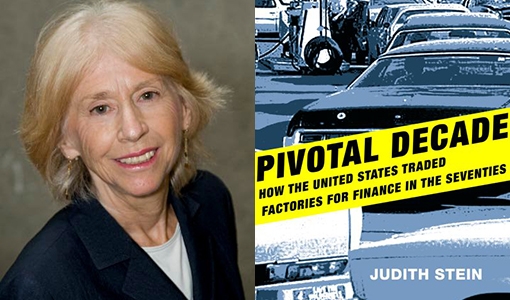
Historian Judith Stein traces how previously reigning economic ideas and practices — ones that favored manufacturing, low unemployment, and high wages — were gradually dismantled in the face of challenging political and economic circumstances.
Historian Ernest Freeberg discusses how Eugene Debs, Socialist Party presidential candidate, was sent to federal prison after speaking out against World War I. The imprisonment of Debs and others sparked a national debate about the limits of free speech.
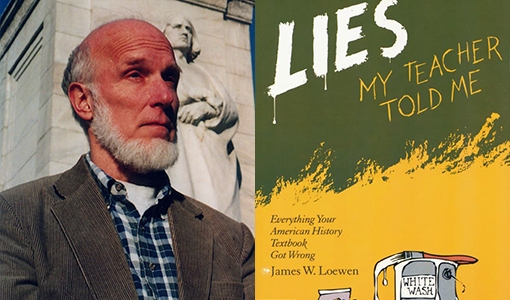
James W. Loewen discusses the overreliance on history textbooks, many of which present a warped or distorted view of the Civil War and other critical episodes in American history.
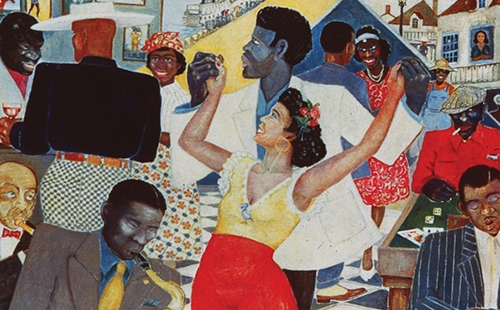
Lara Putnam explores the experiences of workers as they migrated between the United States, Caribbean islands, and Central and South America, as well as the efforts of nations to control these movements during the late 19th and early 20th centuries.
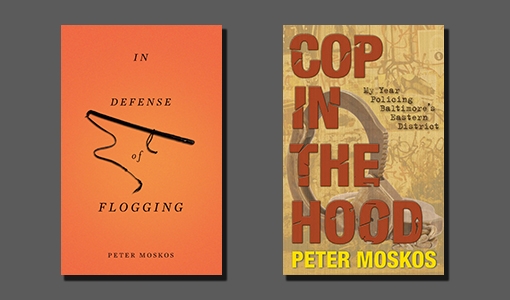
Sociologist Peter Moskos discusses two troubled institutions at the heart of the American criminal justice system: police departments and prisons. Moskos served as a police officer in Baltimore, Maryland and then wrote, "Cop in the Hood: My Year Policing Baltimore’s Eastern District."
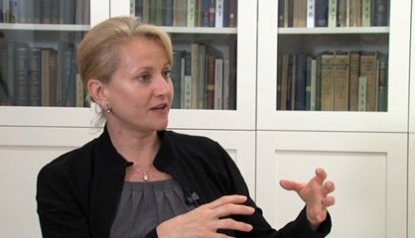
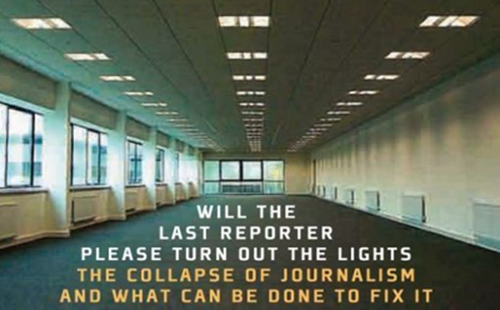
Media scholar and co-editor of "Will the Last Reporter Please Turn Out the Lights: The Collapse of Journalism and What Can Be Done to Fix It," Victor Pickard, discusses the severe crisis facing journalism in the United States and its meaning for democracy.
Anothropologist Roger Rouse discusses the popular Disney film series, "Pirates of the Caribbean," as a way to answer the question, “How do major media corporations use images of piracy as they work to shape the ways we engage the world?”
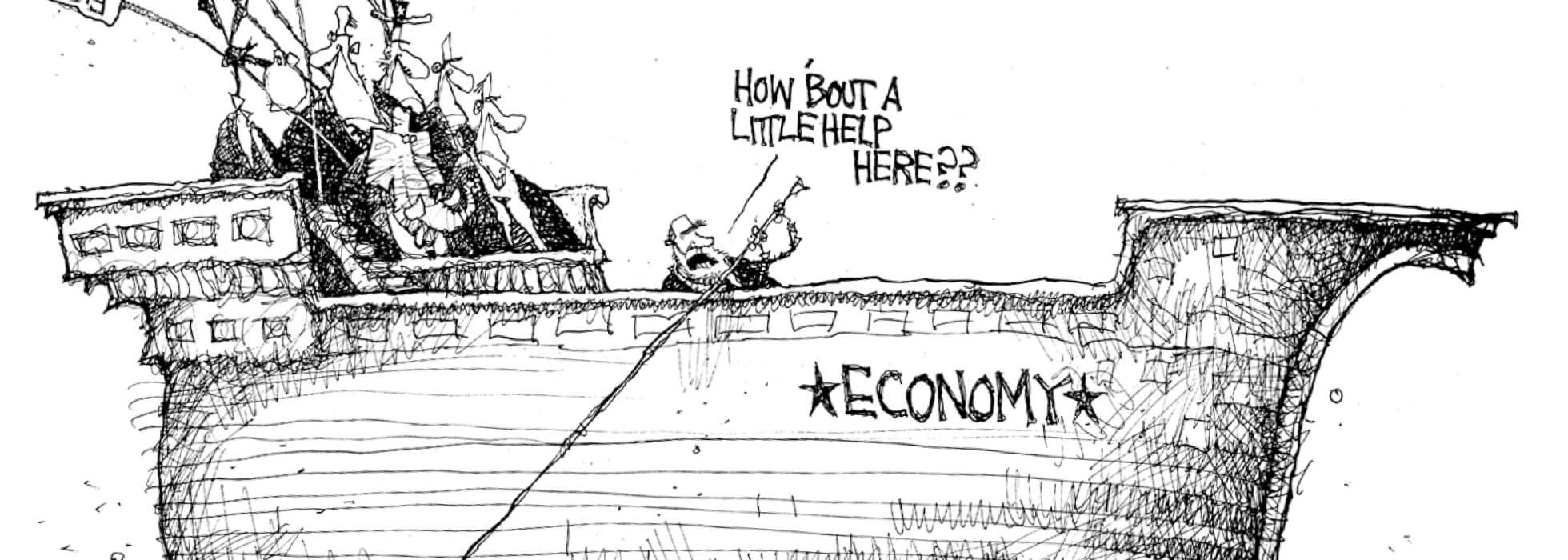
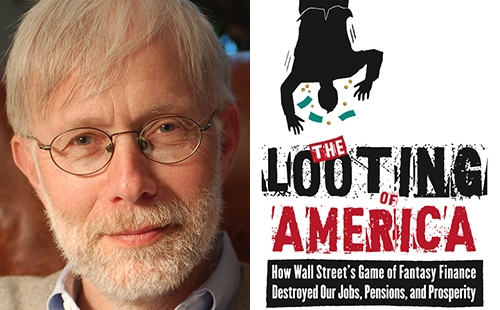
Les Leopold discusses the state of the economy, the job crisis, and financial deregulation, while raising questions about the adequacy of the labor movement and the left's response to these developments.